
Bank of New York Mellon Corp has pulled out of providing financial services to the Adani group and its Carmichael coal mine in Australia, saying the venture is incompatible with its environmental, social and governance rules.

Drugs worth more than Rs 5,300 crore were seized and 102 people involved in illicit narcotics trade apprehended by the Gujarat police in the last one-and-a-half years, the state legislative assembly was informed on Tuesday.

NDTV founders Prannoy Roy and his wife Radhika Roy on Friday said they will sell all but 5 per cent of their remaining shareholding in the news broadcaster to Adani Group for up to Rs 647.6 crore. Roys, who founded New Delhi Television Ltd (NDTV) as India's first and largest private producer of news current affairs and entertainment television, lost their status of being the company's largest shareholder in recent weeks. This follows Adani Group becoming the majority shareholding of NDTV after first buying out a company backed by the founders and then acquiring more shares from the open market.

News broadcaster New Delhi Television Ltd's (NDTV's) promoter firm RRPR Holding said on Monday that it had transferred shares constituting 99.5 per cent of its equity capital to Adani group-owned Vishvapradhan Commercial (VCPL). The transaction was done on Monday, RRPR Holding said in a disclosure to the stock exchanges, in consonance with a conversion notice, dated August 23, 2022, issued by VCPL. This follows the expiry of the two-year restraint imposed by the Securities & Exchange Board of India (Sebi) on November 26, it said.
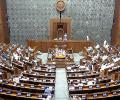
The Parliament session is set to start today, with various issues slated to be discussed, including the Waqf Act (Amendment) Bill.

The sale of Essar Oil was India's biggest deleveraging exercise undertaken by any debt-heavy group

The move comes days after the Indian Navy also warned of a possible terror attack from the sea side.

Sections of our media and elites take Western reports/judgements at face value and are ready to condemn the targets without understanding the deeper power linkages behind such actions, asserts Colonel Anil A Athale (Retd).

Nearly 90 per cent of the stocks comprising the National Stock Exchange Nifty 500 Index and 49 of the 50 stocks that make up the Nifty50 are trading above their respective 200-day moving averages (DMAs). The 200-DMA is considered one of the most relevant trend indicators by investors and traders. They believe that stocks and indices trading above this key level exhibit strength and are likely to rally, while those trading below this level are viewed as bearish, with the stock/index expected to see a selloff.

Asia's richest man Gautam Adani on Wednesday said his ports-to-power conglomerate will build three giga factories for manufacturing solar modules, wind turbines, and hydrogen electrolyzers as part of a $70 billion investment in clean energy by 2030. Adani group is stepping up investments across the green energy value chain as it aims to become the world's top renewable energy producer by 2030. "The Adani Group has already committed $70 billion (for climate change and green energy).
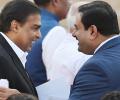
Unveiling his infrastructure conglomerate's green vision, billionaire Gautam Adani on Tuesday said his group will invest $20 billion over the next 10 years in renewable energy generation and component manufacturing and will produce the world's cheapest green electron. The port-to-energy conglomerate plans to triple its renewable power generation capacity over the next four years, foray into green hydrogen production, power all data centres with renewable energy, turn its ports into net carbon zero by 2025, and plans to spend over 75 per cent of capital expenditure until 2025 in green technologies, he said. Speaking at JP Morgan India Investor Summit, Adani Group chairman said the USD 20 billion investment will be in renewable energy generation, component manufacturing, transmission and distribution.
Sources said Adani had not been able to tie up any financing for the coal project
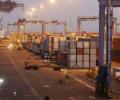
In its final order, the environment ministry had concluded that the upfront payment of Rs 200 crore as Environment Restoration Fund for violations and damage done was not permitted under the Environment Protection Act. Consequent to this order, the penalty that could be imposed on any confirmation of violation in the future is a maximum of Rs 1 lakh.

Adani Airports is planning to centre its airport business around Mumbai and Ahmedabad by developing them as gateway airports, feeding them with traffic from other airports in the company's portfolio. The Ahmedabad-based conglomerate - with investments in logistics, transportation, utilities and energy - intends to spend Rs 35,000 crore in the airport business in the next five years. This forms the bulk of the conglomerate's total capex of Rs 50,000 crore. According to a presentation given by the company in an investor call with Bank of America, gateway airports of Mumbai and Ahmedabad will be connected with the feeder airports of Lucknow, Guwahati, Trivandrum, Jaipur and Mangalore.

Billionaire philanthropist George Soros believes the turmoil at Gautam Adani's business empire may weaken Prime Minister Narendra Modi's hold on the government -- a statement which was strongly countered by BJP as an attack on Indian democracy.

Benchmark equity indices Sensex and Nifty closed higher by more than half a per cent on Wednesday following buying in IT, financial and oil stocks after the RBI slowed down the pace of interest rate hikes. Ending its two-day slide, the 30-share BSE Sensex rebounded by 377.75 points or 0.63 per cent to close at 60,663.79 with 24 of its constituents posting gains. The broader Nifty of the NSE spurted by 150.20 points or 0.85 per cent to settle at 17,871.70, riding on a rally in Adani Enterprises, Adani Ports and HDFC Life.
Tatas, Adani, Bharti, HDFC and Sun Groups have clocked huge gains.

Billionaire Gautam Adani's group is said to be planning a surprise entry into the race to acquire telecom spectrum, which will pitch it directly against Mukesh Ambani's Reliance Jio and telecom czar Sunil Bharti Mittal's Airtel, sources said. Applications for participating in the July 26 auction of airwaves, including those capable of providing fifth-generation or 5G telecom services such as ultra-high-speed internet connectivity, closed on Friday with at least four applications. Jio, Airtel and Vodafone Idea -- the three private players in the telecom sector -- applied, three sources with knowledge of the matter said.
Billionaire Gautam Adani on Thursday said his logistics-to-energy conglomerate will invest $70 billion over the next decade to become the world's largest renewable energy company and produce world's cheapest hydrogen. Adani Green Energy Ltd (AGEL), the world's largest solar power developer, is targeting 45 gigawatts of renewable energy capacity by 2030 and will invest $20 billion to develop a 2 GW per year solar manufacturing capacity by 2022-23. Adani Transmission Ltd (ATL), India's largest private sector power transmission and retail distribution company, is looking to increase the share of renewable power procurement from the current 3 per cent to 30 per cent by FY 2023 and to 70 per cent by FY 2030.
The change in the latest Budget will impact the sale and rent of SEZ units of companies like Adani Port, which has large SEZs in Mundra.

'That is the one headline the world is reading about India this week, and it is a potentially damaging story...' 'I don't think a panic mentality has set in, but this story is one that investors and market watchers are absolutely seized with.'

Escalating his attack against Bharatiya Janata Party's prime ministerial candidate Narendra Modi over his development claims, Aam Aadmi Party leader Arvind Kejriwal on Thursday said he is the "vikas purush" (development man) only for industrialists.

The RBI interest rate decision, industrial production data for June and the ongoing quarterly earnings from corporates would largely drive the stock markets this week, analysts said. Other major factors such as global market trends, the movement of oil prices and the trading activity of foreign investors would also influence trading, they added. "The market will have an eye on the RBI Monetary Policy Committee (MPC) meeting, which will be announced on August 10, 2023. We are heading towards the last batch of Q2 earnings of key companies such as Adani Ports, Coal India, Hero MotoCorp, Hindalco and ONGC, among others, which will lead to stock-specific movement," said Pravesh Gour, senior technical analyst, Swastika Investmart Ltd.

Domestic institutional investors pumped Rs 2.3 trillion into equities during H1 CY24. Of this, mutual funds contributed 80%.
Among the Sensex firms, Tech Mahindra, Tata Motors, Bharti Airtel, Wipro, Bajaj Finserv, HCL Technologies, Bajaj Finance, Larsen & Toubro, Mahindra & Mahindra and UltraTech Cement were the biggest laggards. IndusInd Bank, Power Grid, HDFC Bank, ICICI Bank, NTPC, Reliance Industries, HDFC and Tata Steel were the prominent winners.

The political and ideological differences between the Congress and Shashi Tharoor is no longer a matter of whispers.

Christopher Wood, global head of equity strategy at Jefferies has rejigged his equity portfolios. In his Asia ex-Japan long-only portfolio, he has added Axis Bank (5 per cent weightage) and increased holding in Larsen & Toubro (L&T) by one percentage point. This, Wood said, will be paid for by removing the investment in ICICI Lombard General Insurance and reducing the investments in HDFC Bank and Reliance Industries (RIL) by one percentage point each.

The statement came a day after cricket legends Ian and Greg Chappell and few other prominent Australians urged Adani Group chairman Gautam Adani to abandon the mine project

It's hard to say because of the winner-take-all nature of new platform and network businesses, but Reliance has not been an efficient user of capital, and Adani numbers are varied, observes T N Ninan.
Gautam Adani, India's and Asia's second-richest person, added $49 billion to his wealth last year - more than the net addition of wealth by the top three global billionaires Elon Musk, Jeff Bezos and Bernard Arnault, the 2022 M3M Hurun Global Rich List said on Wednesday. Mukesh Ambani, who runs the oil-to-retail conglomerate Reliance Industries, continues to be the richest Indian with a wealth of $103 billion, a 24 per cent rise year-on-year. Adani, the head of ports-to-energy conglomerate Adani Group, is a close second with his wealth surging 153 per cent to $81 billion.

Major gainers include L&T, Asian Paints, Vedanta, Tata Steel, Coal India, Infosys, M&M, Adani Ports, Maruti Suzuki, Axis Bank, HDFC, Power Grid, ONGC, Tata Motors, Sun Pharma, ITC, IndusInd Bank, HDFC Bank and SBI

Corporate India is starting to step up its capital expenditure plans amid government incentives and signs of rising demand, company executives and analysts have indicated. This coincides with the Reserve Bank of India (RBI) recently citing a double-digit growth in private capital expenditure. Healthy balance sheets of banks and corporates, along with increasing capacity utilisation and improving business sentiment, are contributing to a favourable environment for sustained growth in private sector investments, the RBI said in its policy last week.

By refusing permission for the proposed ship-breaking facility, India can send a categorical message to the foreign ship owning countries that they should keep their own waste and recycle
French oil and energy group Total has agreed to a $2.5 billion deal that includes buying a 20 per cent minority stake in Adani Green Energy Ltd (AGEL) from Adani Group, as it builds up its presence in the renewable energy sector. The deal involves Paris-based Total getting a board seat in the largest solar energy developer in the world, as well as a 50 per cent stake in a 2.35 gigawatts portfolio of operating solar assets, the two firms said in statements. Total had in 2018, agreed to buy a 37.4 per cent stake in Adani Gas Ltd - the city gas distribution firm of the Adani Group, and a 50 per cent stake in the billionaire Gautam Adani-run ports-to-energy conglomerate's under-construction Dhamra LNG project in Odisha.

'The larger story of systematic destruction, which can and has been quantified, goes mysteriously missing from any political and/or public discourse about the ongoing devastation in the Ghats,' notes Prem Panicker.

ITC, Sun Pharma, Maruti, M&M, Tata Motors, HCL Tech, Wipro, Infosys, HUL, Bharti Airtel and Reliance were among the major losers. Kotak Bank rose the most by 1.59 per cent, followed by IndusInd Bank, Bajaj Finance and Bajaj Finserv. L&T, SBI, TCS and HDFC Bank also closed higher.

Billionaire Mukesh Ambani's Reliance Industries Ltd climbed two spots to No. 53 on Forbes' latest Global 2000 list of public companies worldwide. Forbes Global 2000 ranks the largest companies in the world using four metrics: sales, profits, assets and market value, Forbes said releasing the 2022 ranking of the world's top 2,000 companies. Reliance is the top-ranked Indian firm on the list, followed by State Bank of India at No. 105, HDFC Bank at No. 153 and ICICI Bank at No. 204.

Adani described the meeting as warm and productive.

The Adani group had applied for the Northern Australia Infrastructure Facility loan for building the 388-km rail line to connect the Carmichael coal mine to the sea port.

Container Corporation of India (Concor) has been the worst performer among major logistics & port stocks registering returns of about 4 per cent over the past three months as compared to 10-12 per cent for peers Gateway Distriparks and Adani Ports and SEZ. Uncertain outlook on the export-import (EXIM) trade front, market share loss, lack of progress on divestment, and weak June quarter results weighed on the stock. Volume and margin movement will be key triggers for the stock going ahead. As was the case in the previous quarter, margin performance was muted even in the June quarter. Operating profit in the quarter was down 17 per cent at Rs 391 crore missing estimates by over 15 per cent. Operating profit margins at 20.4 per cent, too, were down sharply by 350 basis points over the year-ago quarter.
